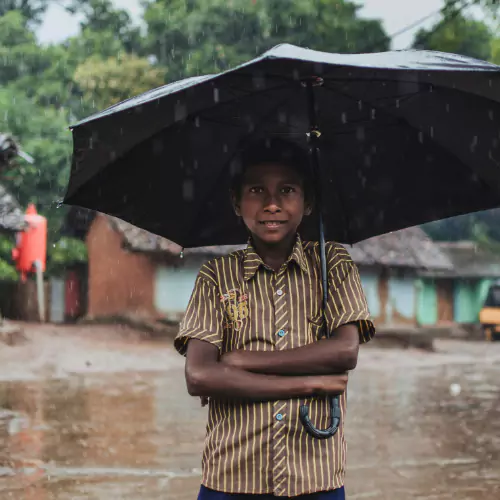
Anandshala, an initiative of Deshkal Society, is a joyful learning space for children from migrant and marginalized communities in Noida’s Shramik Colonies, with a special focus on adolescent girls.
Born out of field research in Shramik Kunj clusters, Anandshala addresses the disruptions caused by migration, poverty, and exclusion by offering after-school support, digital literacy, creative workshops, and community engagement with mothers and caregivers.
Aligned with SDG4 (Quality Education), we go beyond textbooks to nurture confidence, life skills, and self-expression, helping first-generation learners stay in school and build dignified futures.
Our work rests on three principles: inclusion, contextual relevance, and future readiness. Anandshala grows as a community-driven effort: one child, one family, and one spark at a time.

Anandshala approaches learning not as a one-size-fits-all model, but as a process deeply rooted in children’s everyday realities-particularly those of girls from migrant worker households in urban informal settlements.
At Anandshala, learning is shaped through art, community, collaboration, and lived experience. Each activity we undertake is rooted in the belief that education must be joyful, inclusive, and connected to everyday life.
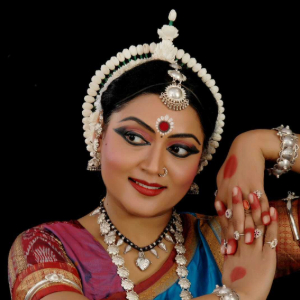
Anandshala was launched with Shweta Mukti, a powerful Odissi performance by Kavita Dwibedi, exploring liberation through Buddhist philosophy and feminine introspection. Set against themes of migration and resilience, it symbolised Anandshala’s vision where tradition, gender, and education converge while uniting artists, educators, and communities.
Children explore imagination and expression in painting workshops, often their first exposure to colours and display of artwork. These sessions nurture storytelling, confidence, and creativity, proving that a safe space can unlock hidden potential even amidst precarity.
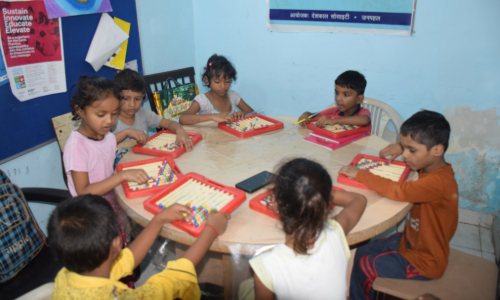
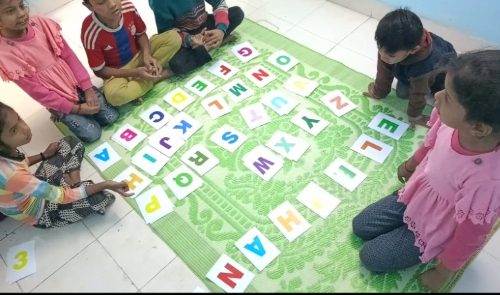
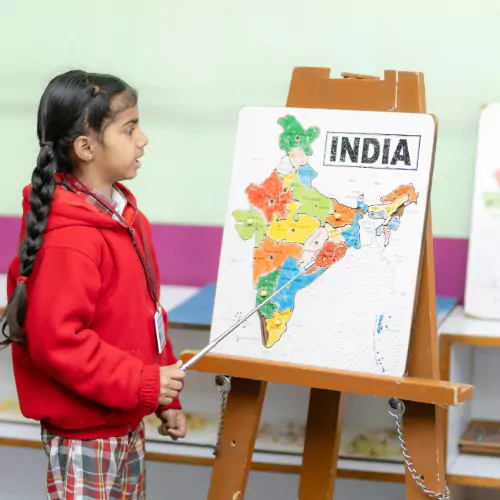
Anandshala uses playful tools like alphabet and number cards to strengthen early literacy and numeracy. For first-generation learners, these tactile resources connect daily experience with academics, making language and maths accessible and engaging.
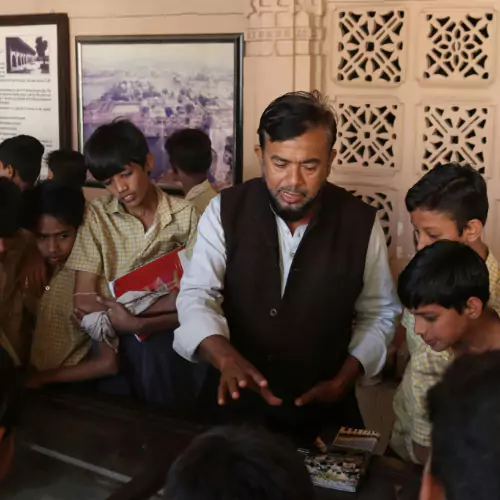
Small group sessions foster peer learning, collaboration, and shared responsibility. Instead of competition, children discover leadership, empathy, and mutual support, turning the collective rhythms of their home lives into strengths for education.
Renowned vocalist Rashmi Aggarwal performed Melodies for a Better Tomorrow in support of Anandshala. The concert blended classical and semi-classical music, raising funds while affirming the power of art (like education) to inspire and connect communities.
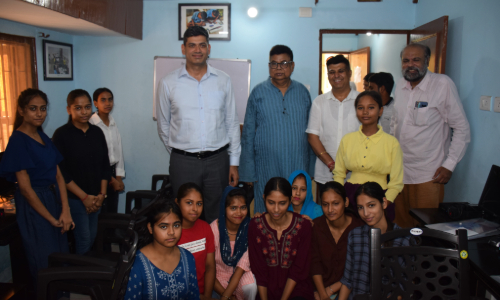
Regular mothers’ meetings transform caregivers into allies in learning. Through discussions, games, and storytelling, they share challenges and strategies, support their daughters through adolescence, and find their own voices in the process.
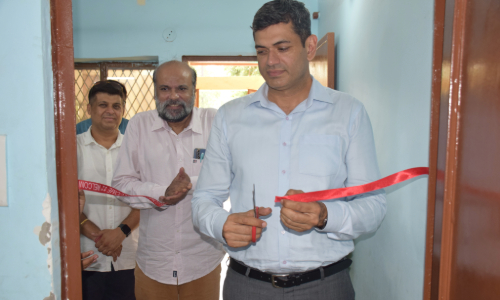
To tackle bureaucratic barriers to education, Anandshala and Janpahal established a Common Service Centre. By providing Aadhaar, PAN, health cards, and welfare services, it links schooling with broader rights to citizenship, dignity, and state access.
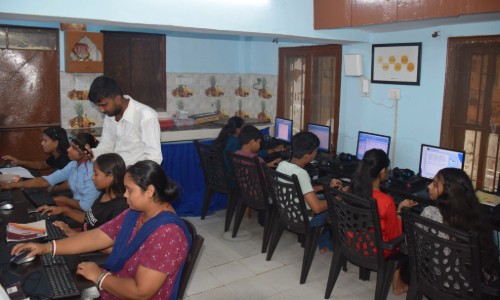
Anandshala’s flagship after-school program equips adolescents, especially girls from migrant families, with digital literacy and future-ready skills. Through a six-month curriculum covering computers, Microsoft Office, design tools, coding basics, and soft skills, it builds confidence, career exposure, and employability for first-generation learners with little or no access to technology at home.
Anandshala is a learning space for children of migrant and daily-wage workers in Noida, blending quality education with life skills under the SDG4 model. A pilot by Deshkal Society, it will expand to five more Shramik Kunjs in Gautam Buddha Nagar. This video is a ground report by Parimal Kumar, Kiddocracy, from Sector 93, Noida.


Your support builds a society of dignity, inclusion, and justice. Every contribution strengthens Anandshala and empowers communities through education, culture, and dialogue. Connect with us at deshkal@gmail.com for donations, partnerships, volunteering, or careers.
“When I visited Anandshala, I was deeply humbled by the gratitude I received. Seeing how my small donation was adding value to lives of children here was a heartwarming experience.”
-Shruti
“I started volunteering with Anandshala a couple of months ago. It gives me immense joy to be able to contribute meaningfully to the lives of children. Children here are quick learners and somewhere along the path of teaching them, I ended up learning more from them.”
-Jayant


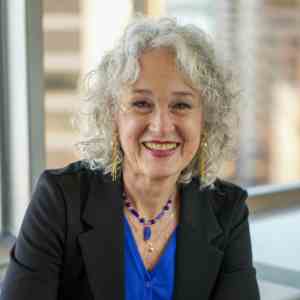
Prof. Emerita in the College of Education, California State University, USA
Odissi dancer; Director, Odissi Akademi; Founder Trustee, Sanchari Foundation
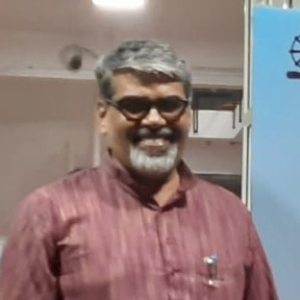
Educationist; Former Director, Research and Training, Dept. of Education, Bihar
Christine E. Sleeter, PhD is Professor Emerita in the College of Education at California State University Monterey Bay, where she was a founding faculty member. She has served as a visiting professor at universities in the U.S., New Zealand, and Spain, and is a former President of the National Association for Multicultural Education and former Vice President of the American Educational Research Association. A leading scholar of anti-racist multicultural education, ethnic studies, and teacher education, she has published over 170 articles and 22 books, including Critical Multicultural Education (2024). She is an AERA Fellow, NEPC Fellow, and National Academy of Education member, and has received multiple national awards for social justice scholarship
Kavita Dwibedi is one of India’s leading Odissi dancers and a recipient of the prestigious Odisha State Sangeet Natak Akademi Award. Trained under her father and guru, the late Shri Hare Krishna Behera, she has performed in over 40 countries and before dignitaries including President Droupadi Murmu. As the Founder of Sanchari Foundation, she is celebrated for her evocative abhinaya, innovative choreography, and vital contributions to globalizing the Odissi dance tradition.
Dr. Ajay Kumar Choubey is an educationist and leader in Delhi known for his work on equity, inclusion, and social justice in education. His vision is to empower educators, students, parents, and communities to become active changemakers who contribute to meaningful social transformation. As an educational leader, he promotes schools as dynamic learning organizations where every participant can grow and realize their potential. His work emphasizes inclusive, child-centered, and innovative pedagogical practices, ensuring that every learner experiences education as an empowering journey toward becoming knowledgeable, confident, and socially responsible.
Shushmita Chatterji Dutt holds degrees in History and Education, including a PhD in Girls’ Education, and has nearly three decades of experience in the education sector. She has worked extensively with major Government of India programmes such as DPEP, Mahila Samakhya, KGBVs, Sarva Shiksha Abhiyan, and Samagra Shiksha. She has also served as Senior Education Specialist with UNICEF in New Delhi and Jaipur, and has worked with the World Bank on poverty-eradication initiatives and with UNESCO on Education for All. Her experience spans national and international NGOs across South Asia. She writes regularly for journals in Education and History, and also paints and exhibits her artwork.
Jyoti Raina is a Professor of Education at Department of Education, Gargi College, Universityof Delhi. She has taught various educational studies courses for the past three decades and has published several academic papers and edited two volumes on educational policy, psychology of learning and initial teacher education. She has a keen interest in school education and serves on the school management committees of both a private and a government school. Her current research interests include teacher education, student-teacher research, and educational policy.
Chaise LaDousa is Director of Education Studies, Hamilton College, USA. He has conducted field research in North India studying languages and the role they play in education and India’s rapidly changing political economy. Another project has focused on the importance of fun in expressive culture in institutions of higher education in the United States. In addition to publishing numerous professional articles, he is the author of Hindi Is Our Ground, English Is Our Sky: Education, Language and Social Class in Contemporary India, published in 2014, and Signs of Play: Faith, Race, and Sex in a College Town, published in 2011. He attended the college of the University of Chicago and received his doctorate from Syracuse University.
Dr. Harshvardhan Kumar holds a PhD in Education from the University of Delhi and has over 16 years of experience in education and child development. He has worked with leading national and international organizations, including UNICEF, NCERT, IGNOU, and the University of Delhi. His expertise spans curriculum design, textbook development, teacher-training, educational content creation, translation, and documentation. Alongside academic work, he is a regular contributor to Hindi children’s literature in well-known magazines. He currently serves as Head of Early Childhood and Elementary Education for American India Foundation projects at TLF, where he leads initiatives to strengthen foundational learning for children.